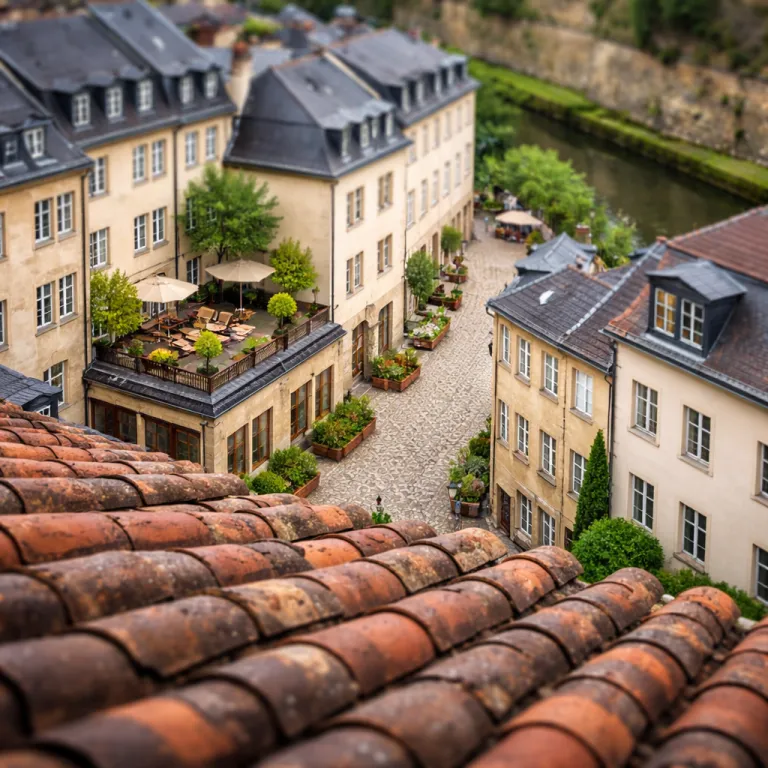
The structural advantage: when a micro state rewrites business travel logistics
Business travel in Luxembourg works because the country is compact yet globally connected. The grand duchy turns a short term business trip into a realistic leisure extension, since every key district in Luxembourg City sits within roughly a 25 minute public transport radius. For executives used to sprawling metros, that scale changes how you plan each day.
From the airport to Kirchberg’s financial institutions, the transfer time rarely exceeds 20 minutes, which reshapes the psychology of corporate travel to Luxembourg. Free nationwide public transport removes friction, so a tight day period of meetings can still end with a late dinner in Grund or a walk along the Corniche. This is not just convenient travel; it is a structural reason the country outperforms its size for blended business trips.
Luxembourg Government policy has deliberately supported this model of integrated business and leisure travel. The state maintains business friendly regulations and a multilingual workforce, which means meetings with citizens from different European markets feel effortless. That same multilingual ease carries over when you visit Luxembourg museums, book a table, or arrange a private driver for a quick trip to the Moselle valley.
For travelers arriving from the United States, Hong Kong, Sweden or Switzerland, the legal and administrative framework is reassuringly clear. Within the Schengen area, Luxembourg follows harmonised visa requirements, so most business visitors with a valid passport and appropriate residence status can move freely for up to 90 days. When your country residence is outside the Schengen zone, your corporate travel team should always verify the exact day period allowed for business travel and any additional documents required.
Health safety and overall safety security standards are high, which matters when you extend a work trip into the weekend. The national healthcare system is robust, but business travelers should still carry comprehensive travel insurance and separate health insurance that includes medical evacuation coverage. That combination ensures that any unexpected medical issue during your stay in Luxembourg City or during a domestic excursion elsewhere in the country can be handled without stress.
Luxair plays a quiet but decisive role in this ecosystem. Its business class services are tailored to short term hops from major European hubs, which makes repeated business trips to Luxembourg feel manageable rather than draining. When flights are predictable and punctual, executives are more willing to add an extra day to travel Luxembourg and explore the city’s cultural side.
How geography and density turn meetings into meaningful stays
Luxembourg City’s geography is unusually kind to the business leisure traveler. The old fortress plateau, the Grund valley and the modern Kirchberg plateau are distinct, yet they sit so close that you can cross between them in minutes. That density means a single trip can combine high level meetings, Michelin starred dinners and riverside walks without wasting days in transit.
Per capita GDP runs at roughly two and a half times the European Union average, and that wealth shows in infrastructure and hospitality. Luxury and premium hotels cluster around the city centre, Kirchberg and the emerging Cloche d’Or district, giving business visitors to Luxembourg a choice of addresses within easy reach of corporate offices. When you book through a curated platform that specialises in exclusive resorts and premium hotel booking for discerning travelers, you can match each property’s location to your exact meeting map.
The dining scene is where the country truly punches above its weight. With a population of around 660,000 and a double digit constellation of Michelin stars, Luxembourg offers a credible four night extension that rivals far larger capitals. For business trips that stretch from a Thursday board meeting to a Monday site visit, that culinary density keeps each day and night feeling distinct.
Executives often underestimate how the free transit network amplifies this effect. When trams and trains cost nothing, you are more inclined to shift from a formal business dinner in Kirchberg to a late drink in Clausen, or to schedule a morning run along the Petrusse valley before a national client briefing. The result is that corporate travel in Luxembourg becomes less about shuttling between anonymous conference rooms and more about inhabiting the city.
From a legal and compliance perspective, the country is straightforward for corporate travel managers. Luxembourg is part of the Schengen area, so once visa requirements are satisfied and a valid passport is stamped, movement between neighbouring states is seamless. That simplicity is particularly attractive for executives whose country residence is in the United States, Sweden, Switzerland or Hong Kong, since a single multi day trip can cover several markets.
Health and medical considerations also support longer stays. While the national system is excellent, companies should still insist on travel insurance that includes health insurance and explicit medical evacuation benefits for all staff. This is not because evacuation from Luxembourg City is likely, but because consistent coverage across every country keeps risk management clean and protects both the business and its citizens working abroad.
Kirchberg to the Moselle: where business ends and leisure quietly begins
Kirchberg is the obvious anchor for many corporate travelers, yet it is only one face of Luxembourg City. Step away from the glass towers and you reach the old town in minutes, where cobbled streets and cliff edge viewpoints frame a very different pace. That proximity is why business trips to Luxembourg lend themselves so naturally to a Friday night pivot into leisure.
For executives extending a trip with family, the city offers a surprisingly strong set of luxury properties that work for both children and adults. Several five star addresses near the Parc de Merl and the city centre combine large suites, calm lobbies and attentive concierges who understand the rhythm of business trips that morph into weekend breaks. A curated guide to family friendly luxury in Luxembourg City helps you choose a residence that respects both your meeting schedule and your family’s sleep.
Once the last meeting of the day is done, the country opens up quickly. The Moselle wine region sits less than 40 minutes from Luxembourg City by car, which makes a late afternoon tasting or a riverside dinner entirely realistic. For a different texture, the Mullerthal Trail and its sandstone gorges can be reached within a short term excursion, turning a single free day into a complete reset.
Health safety and safety security standards remain high even as you move beyond the capital. Well maintained roads, clear signage and reliable mobile coverage mean that a domestic drive to the Ardennes or the Moselle rarely feels risky, even for visitors from the United States or Hong Kong. Still, your travel insurance and health insurance should explicitly cover activities outside the main urban area, especially if you plan hiking or cycling during your visit Luxembourg.
Corporate travel teams sometimes worry about medical support when staff leave major cities. In Luxembourg, that concern is largely mitigated by the density of clinics and hospitals across the country, though responsible planning still includes medical evacuation coverage for worst case scenarios. When medical evacuation is written into your policy, a weekend hike after a week of business travel Luxembourg becomes a calculated choice rather than an anxious gamble.
From a regulatory angle, nothing changes when you cross from Luxembourg City into the countryside. The same Schengen area rules apply, the same visa requirements hold, and your valid passport remains the only document usually required for border free movement into neighbouring states. That continuity is one more reason why executives from Sweden, Switzerland or any other Schengen country residence feel comfortable turning a two day meeting into a multi day trip.
Where Luxembourg still loses: cultural depth, scale and perception
For all its strengths, Luxembourg does not compete with Paris or Vienna on cultural scale. The national museums are well curated, but they cannot match the depth of collections in larger capitals, which matters if your ideal trip revolves around opera seasons and blockbuster exhibitions. Business oriented travel to Luxembourg excels when you want intensity over breadth, not when you seek endless options.
Nightlife follows a similar pattern. There are excellent cocktail bars in Grund and Clausen, and a handful of late night addresses in the station district, yet the scene remains compact. Executives used to the constant buzz of Hong Kong or the United States coasts may find that a three night stay hits the natural limit of variety.
Perception is another constraint. Some international citizens still view the country primarily as a financial centre, not as a place to travel for pleasure, which can dampen enthusiasm for extending business trips. That image lags reality, especially when you consider the rise in leisure travel and the growth in MICE events reported by national statistics.
There is also the question of cost. High per capita GDP and strong salaries mean that premium hotels and fine dining in Luxembourg City are rarely cheap, even by European standards. For corporate travel managers, this requires clear policies on nightly caps and on which categories of residence are required or optional for different staff levels.
Yet the structural advantages still matter more than these drawbacks for many executives. When a country offers free public transport, short transfer times and a concentration of high quality restaurants, the overall value of a blended business and leisure trip remains compelling. The key is to calibrate expectations and to use the city as a base for targeted excursions rather than as a standalone mega destination.
For those planning repeat business travel Luxembourg, variety comes from alternating neighbourhoods and nearby regions rather than from sheer urban scale. One trip might focus on Kirchberg and the Philharmonie, another on the old town and the Petrusse valley, and a third on the Moselle and the northern castles. In each case, the same legal framework, Schengen area access and health safety standards underpin a consistent experience.
A three step framework to make every extended stay earn its weekend
Executives who get the most from Luxembourg follow a simple structure. They design the business core of the trip around Kirchberg, Cloche d’Or or the city centre, then they layer leisure segments before and after that core. This approach respects corporate priorities while acknowledging that business travel Luxembourg can and should feel rewarding.
Step one: map meetings to micro districts. Start by plotting every appointment on a city map, then choose a luxury hotel within a short walk or tram ride of the densest cluster. This keeps your day period efficient, reduces reliance on taxis and leaves more time for unhurried dinners or a quick visit Luxembourg City’s UNESCO listed old town between sessions.
Step two: lock in compliance and care. Before you confirm dates, verify Schengen area visa requirements for your nationality and ensure your valid passport has sufficient remaining days for entry. Corporate travel policies should mandate comprehensive travel insurance and health insurance with explicit medical evacuation coverage, even though the probability of medical evacuation from this country is low.
As one official FAQ from the national portal puts it, “Why is Luxembourg attractive to business travelers? Strategic location, multilingual workforce, and modern infrastructure.” That same source notes, “What leisure activities are available in Luxembourg? Cultural events, fine dining, and scenic landscapes.” It also confirms, “How does Luxembourg support business tourism? Through business-friendly policies and high-quality MICE facilities.”
Step three: engineer the leisure arc. Decide whether your leisure time sits before, after or threaded through the business days, then reserve restaurants and experiences accordingly. A Thursday arrival from the United States or Sweden Switzerland allows a soft landing dinner, two intense business days, and a Sunday in the Moselle before flying home, while a Monday start from Hong Kong might justify a weekend in the Ardennes first.
For inspiration on where to stay during shoulder seasons, consult guides to long weekend luxury stays in late spring that focus on characterful properties in the city centre. These curated selections help you align your residence with both your meeting calendar and your preferred style of leisure. Over time, repeating this framework turns business trips into a series of well structured visits rather than isolated obligations.
Corporate travel managers can formalise this approach by building Luxembourg specific playbooks. These documents should outline preferred hotels by district, clarify legal and visa requirements for different country residence profiles, and specify minimum health safety standards for all bookings. When such playbooks exist, the decision to extend a trip by a few days becomes an easy, policy compliant choice rather than a negotiation.
Key figures that explain Luxembourg’s business leisure edge
- Per capita GDP in Luxembourg is around 2.5 times the European Union average, according to the Official Portal of the Grand Duchy of Luxembourg (GDP per capita in purchasing power standards, 2022 data), which underpins the country’s investment in infrastructure, hospitality and safety security.
- Leisure trips reached approximately 2.83 million in the most recently reported year (Statec tourism statistics, 2019), highlighting how a traditionally business focused destination has become a credible leisure and business leisure market.
- Free nationwide public transport means that transfers between Luxembourg City centre, Kirchberg and Cloche d’Or typically stay within 25 minutes, a structural advantage that few competing European capitals can match for business travel logistics.
- The national strategy emphasises business friendly policies, a multilingual workforce and modern infrastructure, which together have driven a rise in leisure travel, growth in MICE events and expansion of business services across the country.
Trusted references for further factual information include the Official Portal of the Grand Duchy of Luxembourg, Statec (Luxembourg’s national statistics office) and the Luxembourg Convention Bureau.