Why the Belgian Ardennes from Luxembourg suit a luxury countryside escape
Planning the Belgian Ardennes from Luxembourg gives you rare flexibility. From a single grand duchy base, you can reach deep forests, Second World War sites and river towns in under two hours. This compact geography turns a refined hotel stay into a cross-border circuit through the wider Ardennes region, with minimal time lost in transit.
The landscape of the Ardennes in eastern Belgium, south-eastern Belgium and the north of the grand duchy is all about beech and oak forests, steep valleys and quiet villages. It stretches as a coherent region from the Luxembourg Ardennes, known locally as Éislek, towards the cities of Liège and Dinant on the River Meuse, then down to the Grand Est and Hauts-de-France. For travellers, this means you can wake in Luxembourg City, cross into rural Belgian countryside after breakfast and still be back at your hotel before a late dinner, even with several unhurried stops.
Historically, this cross-border region derives from ancient routes that date back to Roman times. The same hills that once challenged Roman legions later shaped the Battle of the Bulge, when American forces and German troops fought through snowbound forests between Bastogne, the Luxembourg Ardennes and eastern Belgium. Today, the only dilemmas you face are choosing between a Michelin-starred lunch in Luxembourg City, a slow drive along the River Meuse near Dinant or a spa afternoon in a château-style hotel hidden in the woods, with secure parking and easy access to walking trails.
Structuring an autumn forest drive from Luxembourg City or Éislek
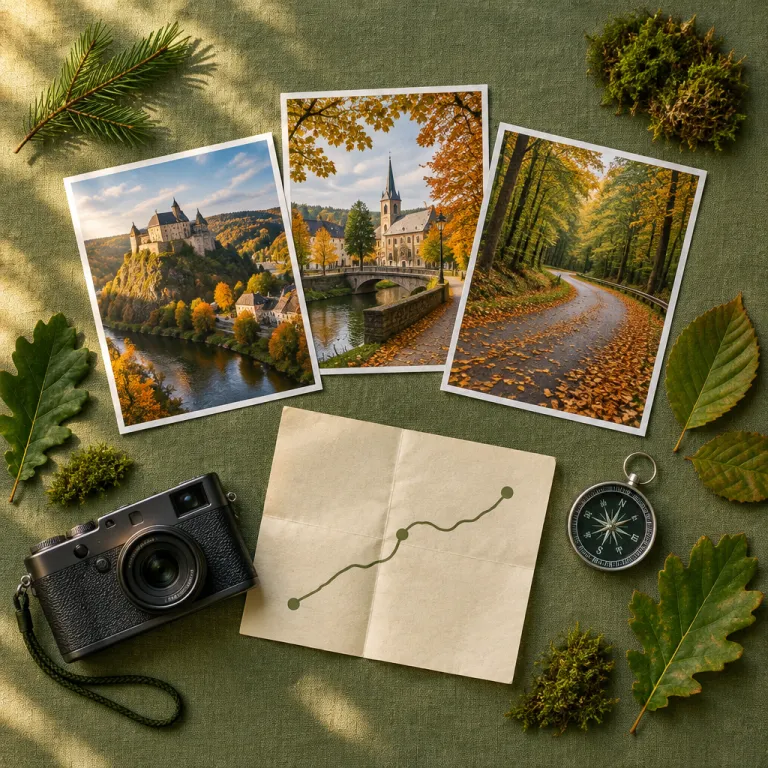
For the Belgian Ardennes from Luxembourg, autumn is the most atmospheric season. The forests of the Ardennes region turn copper and gold, roads are quieter and the air feels crisp enough to justify every slow lunch. Planning your route carefully lets you combine Bouillon, Bastogne and long forest stretches without rushing, while still allowing time for short walks or café stops.
If you stay in Luxembourg City, think of the capital as a refined urban anchor for day trips. From the Kirchberg plateau, a property such as a refined city escape in Kirchberg places you close to motorway links heading north towards Éislek and on towards Belgium. Driving from Luxembourg City to Bastogne usually takes around one hour for roughly 70 kilometres via the A7 and N84, and from there Bouillon lies another hour across rolling countryside, with forest roads that feel made for an unhurried autumn drive and frequent lay-bys for viewpoints.
Travellers who prefer a quieter base can choose a hotel in the Luxembourg Ardennes, in towns such as Clervaux or Vianden, where views of town and castle walls frame the valleys. From Éislek, Bastogne is even closer, often 35 to 45 minutes by car depending on your starting point, and the cross-border drive into the south-eastern corner of Belgium feels more rural and less trafficked. You can still return to the grand duchy the same evening, or continue towards the River Meuse and the Meuse valley if you plan an overnight in France or the Grand Est after your Ardennes circuit, perhaps in a small inn with on-site parking.
Bouillon and the River Semois: castles, bends and quiet roads
Bouillon is the romantic counterpoint to Bastogne on any Belgian Ardennes from Luxembourg itinerary. The town curls around a tight river bend, with its medieval fortress above offering wide views of town roofs and the surrounding forests. Arriving from Luxembourg, the final kilometres drop through wooded slopes that glow in autumn light, with occasional picnic spots overlooking the River Semois.
The castle of Bouillon stands on a rocky spur above the River Semois and has medieval origins, with major fortifications dating from the 11th century and later periods of the duchy and its shifting allegiances between France, the Low Countries and the German-speaking world. From the ramparts, you look down on the River Semois as it loops through the valley, a quieter cousin to the River Meuse further north near Dinant and Liège. Many visitors time their visit for late afternoon, when the stone walls warm in the low sun and the surrounding Ardennes forests deepen in colour; typical opening hours run from late morning to early evening, with last entry usually about an hour before closing.
From Bouillon, you can drive west towards the Grand Est and Hauts-de-France, or loop back towards eastern Belgium and the Luxembourg Ardennes for the night. Those planning a longer circuit sometimes continue north to the River Meuse, linking Bouillon with the Meuse valley towns and then returning to the grand duchy via Dinant. If you enjoy wine country, you might later balance this forest-focused day with a Moselle stay, using a Moselle wine season and river hotel guide to choose a property along the Luxembourg riverfront, where many hotels offer terraces facing the water.
Bastogne, the Battle of the Bulge and cross border memory
No serious Belgian Ardennes from Luxembourg journey ignores Bastogne. The town sits close to the border between Belgium and the grand duchy, and its streets still carry the weight of war. Here, the Battle of the Bulge moved from map to reality, as American forces held out against German units in bitter winter conditions, often in temperatures well below freezing.
Today, the Bastogne War Museum and the Mardasson Memorial explain how this battle reshaped the region from Luxembourg to eastern Belgium and into Germany. Exhibits show how the front line ran through forests and villages that now feel peaceful, and how the battle affected family men, farmers and hotel owners on both sides of the border. When you drive from Luxembourg City or Éislek to Bastogne, you cross the same ridges and valleys that once challenged supply lines and made every kilometre a risk; allow at least two to three hours on site for the museum, memorial and a short walk through town.
From Bastogne, some visitors continue towards Liège or the cities of Liège and Dinant on the River Meuse, linking war history with river scenery in a single day. Others prefer to return to a quiet hotel in the Luxembourg Ardennes, letting the calm of Éislek forests soften the intensity of the museums. If you are tracing a wider European route, Bastogne also sits within reach of the Grand Est, Hauts-de-France and even onward connections towards the English Channel, especially if you arrived in Belgium via Eurostar train via Paris or Brussels and then continued by regional rail or rental car.
Practical planning: driving, timing and where to stay in Luxembourg
For most travellers, the Belgian Ardennes from Luxembourg work best by car. Driving gives you the freedom to stop at viewpoints, small villages and forest lay-bys that no train can reach. Roads between the grand duchy, Belgium, France and Germany are well maintained, and distances remain short enough for relaxed days, with typical speed limits of 90 km/h on main rural roads and lower limits through villages.
A typical full-day circuit from Luxembourg City might run from the capital to Bastogne, then on to Bouillon, before looping back through the Ardennes region into the Luxembourg Ardennes and Éislek. Expect around four to five hours of driving in total, leaving ample time for museums, castle visits and long lunches. If you prefer a slower pace, consider an overnight in southern Belgium, perhaps near the River Meuse or in a small town between Bouillon and Dinant, then return to your Luxembourg hotel the following day; this also reduces the need to drive after dark on forest roads.
On the Luxembourg side, many visitors split their stay between a city hotel and a countryside property in Éislek or along the Moselle river. This lets you enjoy fortress views in Luxembourg City, then shift to forest-facing rooms in the north, where views of town and valley feel more intimate. Rail links and the wider train network connect the grand duchy with Liège, the Grand Est and beyond, but for this specific Ardennes circuit, a rental car remains the most efficient choice for reaching forests, ridges and the quieter corners of the region south of the main cities.
FAQ
Is a day trip to the Belgian Ardennes from Luxembourg realistic for couples ?
Yes, a day trip to the Belgian Ardennes from Luxembourg is realistic if you focus on one or two key stops. From Luxembourg City, Bastogne is about one hour by car, and Bouillon is roughly another hour beyond, so a loop with limited museum time and a single long meal works well. Travellers who prefer slower travel often turn this into an overnight, adding a River Meuse stop near Dinant or Liège before returning to the grand duchy, which keeps daily driving times comfortable.
Where should we base ourselves in Luxembourg for an Ardennes focused escape ?
For an Ardennes focused escape, many visitors split their stay between Luxembourg City and the Luxembourg Ardennes. The capital offers Michelin-level dining and easy motorway access, while Éislek towns such as Clervaux or Vianden place you closer to the Belgian border and forest roads. This combination keeps driving times short while giving you both urban comfort and countryside calm, with a choice of boutique hotels, spa properties and traditional guesthouses.
How does autumn change the experience of the Ardennes region ?
Autumn transforms the Ardennes region into a patchwork of copper, gold and deep green, especially in the beech and oak forests between Luxembourg and Belgium. Temperatures are cool but comfortable for walking castle ramparts in Bouillon or exploring Bastogne’s outdoor memorials, and daylight hours still allow generous time for scenic drives. Roads are generally quieter than in peak summer, and seasonal menus lean towards game, mushrooms and hearty dishes that suit long lunches.
Can we visit Bastogne and Bouillon without a car from Luxembourg ?
Reaching Bastogne and Bouillon without a car from Luxembourg is possible but less convenient. You would combine train services towards eastern Belgium or the Grand Est with regional buses, which lengthens travel time and reduces flexibility. For travellers keen on linking multiple small towns, forests and viewpoints in one or two days, renting a car in the grand duchy remains the most practical option, especially if you want to include both Bouillon and the River Meuse in a single itinerary.
How does this Ardennes route fit into a wider European itinerary ?
Many travellers arrive in Belgium and Luxembourg via Eurostar train to Brussels or Paris, then continue by regional train or rental car into the grand duchy. From a Luxembourg base, you can drive the Ardennes loop, then continue towards the Grand Est, Hauts-de-France or even onward to the English Channel ports. This makes the Belgian Ardennes from Luxembourg a natural bridge between northern France, western Germany and the Low Countries for travellers planning a multi-country journey, whether by rail, car or a combination of both.