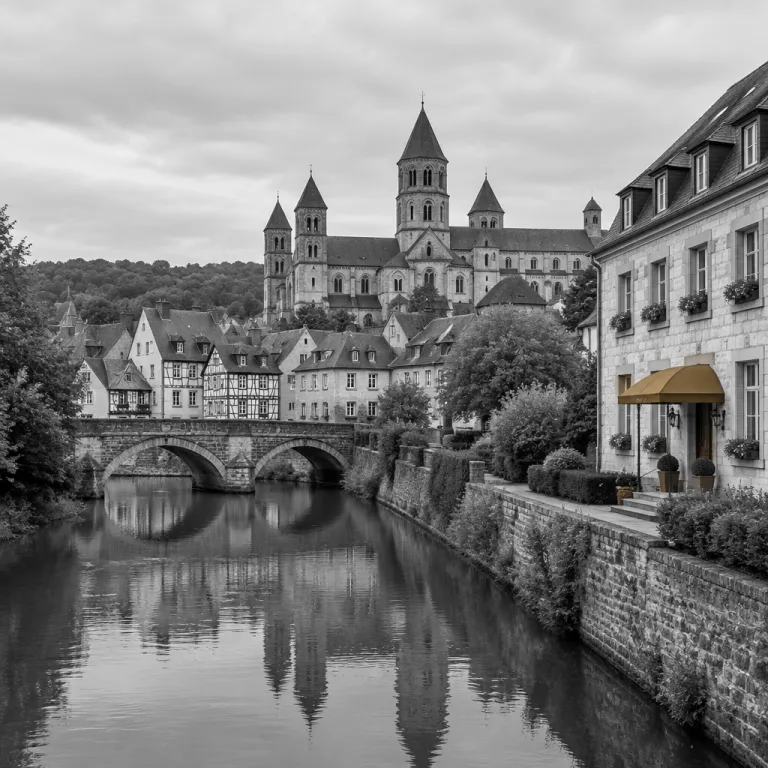
Echternach Luxembourg for solo travelers seeking depth, calm and character
Echternach in Luxembourg is the country’s oldest town and still feels quietly self assured. The compact abbey town sits close to the German border, where the mullerthal region folds into forested hills and sandstone cliffs. You arrive from the city of Luxembourg in under an hour, yet the rhythm here changes completely.
The historic center of Echternach Luxembourg grew around the abbey founded by Saint Willibrord, and that spiritual gravity still shapes the streets. Around the abbey town you find a medieval pattern of lanes, a partial town wall and squares that open suddenly onto the lake valley and the wider region Luxembourg. For a solo traveler, the scale of the town and city balance feels ideal, with everything walkable from the center.
What sets Echternach apart in Luxembourg is the layering of roman, medieval and early modern traces in such a small radius. You can walk from the romanesque basilica to the reconstructed roman villa in less than fifteen minutes, crossing centuries with each turn. The result is a cultural landscape where high quality restoration work meets lived in streets, rather than a museum frozen in a single century.
Many visitors treat Echternach as a day trip from Luxembourg City, but it rewards a longer stay. Using Luxembourg Echternach as a base lets you combine abbey cloisters, lake walks and mullerthal region hikes without changing hotels. For travelers used to the north Alps or the Moselle valley, the scale here feels more intimate yet still distinctly European in its cultural ambition.
Luxury travelers often ask whether to base themselves in the capital or in a smaller town. A smart strategy is to pair a refined city stay, such as a design forward property in Kirchberg like a contemporary hotel overlooking Luxembourg’s modern center, with two or three nights in Echternach. That way you experience both the fortress skyline of the city and the abbey town calm of Luxembourg Echternach in a single trip.
The abbey, basilica and spiritual center of Echternach
The heart of Echternach Luxembourg is its former Benedictine abbey, founded by the Anglo Saxon missionary Willibrord. This abbey town became a spiritual and intellectual center for the region Luxembourg, with scriptoria that produced high quality illuminated manuscripts. Walking through the cloister today, you still sense that mix of contemplation and European reach.
The current abbey complex houses a museum that traces the site from roman roots to its role as a medieval powerhouse. In the abbey museum you find archaeological fragments, liturgical objects and models that explain how the original monastic buildings evolved over each century. For a solo traveler, the clear narrative and compact scale make it easy to connect the exhibits to the streets outside.
Next door stands the Basilica of Saint Willibrord, a romanesque basilica rebuilt after wartime damage yet faithful to its earlier form. The basilica interior feels restrained rather than ornate, with clean lines that highlight the tomb of Willibrord beneath the choir. This romanesque basilica is one of the key cultural landmarks in Luxembourg Echternach and anchors the town’s spiritual identity.
Look closely at the basilica’s structure and you see how roman and medieval influences intertwine. Columns and capitals echo earlier roman villa architecture, while later gothic touches soften the overall massing. The result is a basilica that reads as a palimpsest of European church design rather than a single period statement.
Just beyond the basilica you reach the parish church Peter and Paul, often referred to locally as the church Peter and Paul. This church Peter and Paul stands on the site of an earlier roman building and today offers a quieter counterpoint to the main basilica. Its position near the town wall underlines how sacred and defensive functions overlapped in a medieval town.
If your itinerary includes other monastic sites in the country, such as the abbey in Clervaux with its famous photography exhibition, consider reading a detailed guide like a weekend in Clervaux with castle and abbey focus. Comparing Clervaux and Echternach gives a sense of how different abbey towns in Luxembourg shaped regional cultural heritage. Echternach remains the spiritual cradle, while others developed more around castles or later pilgrimage routes.
The famous dancing procession and living cultural heritage
Echternach Luxembourg is not only about stones and manuscripts ; it is also about movement. Each year the town hosts the famous dancing procession of Echternach, a ritual that has become one of Europe’s most distinctive expressions of intangible cultural heritage. For a solo traveler, even visiting outside the procession date helps you understand how faith, community and choreography intertwine here.
The procession Echternach, often called the famous dancing procession, honours Saint Willibrord and follows a route from the parish church Peter and Paul to the basilica. Participants move in linked rows, taking small side steps that create a gentle swaying rhythm through the town. This dancing procession has been recognised as a UNESCO intangible cultural heritage element, placing Echternach alongside other emblematic European rituals.
While the main procession happens once a year, its presence is felt throughout the town. Information panels, museum displays and local guides explain how the procession evolved from earlier penitential practices into today’s carefully choreographed form. The abbey museum dedicates space to this intangible cultural tradition, showing archival footage and original documents that trace its recognition by the European Commission and heritage bodies.
For travelers used to grand pilgrimages in the north Alps or southern Europe, the scale of the procession Echternach feels more human. Streets are narrow, the town wall frames the route and the romanesque basilica provides a clear visual endpoint. That intimacy makes the famous dancing procession easier to grasp as a lived ritual rather than a distant spectacle.
Even outside the procession period, you can walk the route yourself from the church Peter and Paul to the basilica. Doing so at a slower pace lets you notice how the town’s roman, medieval and later layers form a backdrop to this intangible cultural practice. It is a reminder that in Echternach Luxembourg, cultural heritage is not only preserved in museums but also embodied in annual movement.
Planning a stay around the procession requires early booking, especially for high quality rooms in and around the center. Luxury and premium properties in the wider region Luxembourg often create packages that combine procession viewing with guided cultural tours. If you prefer quieter streets, consider arriving just before or after the main day, when the town still carries the procession’s energy without the full crowds.
Echternach lake, roman villa and the gateway to the Mullerthal region
One of the surprises of Echternach Luxembourg is how quickly the urban fabric gives way to water and forest. A short walk from the abbey town brings you to the Echternach lake, an artificial body of water framed by lawns, paths and low hills. For solo travelers, the lake circuit offers an easy loop of around 3 kilometres, ideal for a reflective morning or evening walk.
The Echternach lake area functions as a recreational center for the wider region Luxembourg, with cafés, boat rentals and seasonal events. Yet even here, cultural layers appear ; on one side of the lake you find the archaeological park of the roman villa. This reconstructed roman villa shows the scale of rural elite life in the late antique century, with hypocaust heating systems and geometric mosaics.
Visiting the roman villa at Echternach gives context to the town’s later medieval prosperity. You see how the landscape was already structured by high quality agricultural estates long before the abbey rose in the center. The villa museum uses models and clear signage to explain how this part of Luxembourg connected to trade routes running north to the Alps and south toward the Moselle.
Beyond the lake, paths lead into the mullerthal region, often marketed as Luxembourg Switzerland for its sandstone formations and narrow gorges. From Echternach you can join sections of the Mullerthal Trail, choosing half day loops that start and end in the town. This makes Echternach Luxembourg an excellent base for travelers who want both cultural depth and access to nature without renting a car.
For detailed walking inspiration, look at curated itineraries such as a pre summer Mullerthal trail guide. These routes show how to link the Echternach lake, forest viewpoints and rock corridors in a single day. Returning to the abbey town in the evening, you move from Luxembourg Switzerland landscapes back to the soft glow of the basilica and church towers.
Compared with hiking bases deeper in the north Alps, the mullerthal region offers shorter distances but denser variety. You can start with a lakeside stroll, continue through beech woods and end among towering sandstone walls within a few kilometres. That proximity to both nature and the cultural center of Echternach Luxembourg is what makes this corner of the country so appealing for solo explorers.
Where to stay in and around Echternach for a heritage led escape
Choosing the right hotel in Echternach Luxembourg is about aligning your stay with the town’s cultural rhythm. Properties in the historic center place you within a few minutes’ walk of the abbey, basilica and church Peter and Paul. Those around the Echternach lake offer more resort style space, with direct access to walking paths and views toward the mullerthal region.
In the center, look for high quality rooms in restored townhouses that respect the medieval street pattern. Many of these addresses sit close to remnants of the town wall, giving a tangible sense of Echternach’s defensive past. From such a base you can step out early to photograph the romanesque basilica before day trippers arrive from Luxembourg City.
Near the lake, larger hotels and villas cater to guests who prioritise space and wellness facilities. These properties often frame views across the Echternach lake toward wooded slopes that hint at Luxembourg Switzerland landscapes. Staying here suits travelers who want to combine cultural mornings in the abbey town with relaxed afternoons by the water or on the terrace of a modern villa.
Solo travelers should pay attention to how each property integrates the town’s cultural heritage into its service. Some hotels partner with the abbey museum for private tours or arrange guided walks that explain the famous dancing procession route. Others highlight regional cuisine, connecting you to the agricultural traditions that once supported the roman villa estates around Echternach.
If you plan to explore more of the region Luxembourg, consider splitting your stay between Echternach and another cultural hub. A few nights in Luxembourg Echternach followed by time in the capital or in a northern abbey town creates a satisfying arc. This approach lets you compare how different parts of Luxembourg balance city energy, town intimacy and rural calm.
Whatever you choose, book early for peak periods such as the procession Echternach or major cultural festivals. High quality rooms in both the center and by the lake sell out quickly when the famous dancing procession or large events draw visitors from across Europe. For quieter reflection on the abbey, basilica and museum, shoulder seasons in spring and autumn work particularly well.
A solo day in Echternach: abbey, old town, lake loop and trails
Designing a solo day in Echternach Luxembourg is about pacing, not rushing. Start in the morning at the abbey complex, when the cloister is still quiet and the museum galleries feel almost private. Here you can trace the story from roman villa foundations to the medieval scriptoria that made this abbey town famous.
After the museum, step into the Basilica of Saint Willibrord and take time near the tomb. The romanesque basilica interior rewards slow looking, from capitals that echo roman motifs to later additions that mark each century of rebuilding. Leaving the basilica, walk up to the church Peter and Paul to complete the spiritual triangle at the center of Luxembourg Echternach.
Late morning is ideal for wandering the medieval lanes between the church and the surviving town wall. You will find small squares, fragments of fortifications and façades that reveal how the town shifted from defensive outpost to cultural center. This is also the moment to note cafés and wine bars for later, when the city day trippers have gone.
After lunch, head toward the Echternach lake for a change of scale and light. The path around the lake is flat and accessible, making it a gentle counterpoint to the steeper trails of the mullerthal region. If time allows, visit the roman villa site to connect your morning’s abbey history with the earlier rural estates that shaped this part of Luxembourg.
By mid afternoon, choose a short marked walk that leads from the lake into the first sandstone formations of Luxembourg Switzerland. Even a two hour loop gives a taste of the rock corridors and forested slopes that have made the mullerthal region a favourite among hikers north of the Alps. Returning to town, you re enter the cultural landscape of basilica towers and church bells with fresh eyes.
End your day tracing part of the famous dancing procession route from the church Peter and Paul to the basilica. Walking this line at your own pace, you understand how intangible cultural practices are woven into the very streets of Echternach Luxembourg. It is a fitting way to close a day that has moved between roman, medieval and contemporary layers without ever leaving a compact, walkable town.
Using Echternach as a base for wider cultural itineraries in Luxembourg
Staying in Echternach Luxembourg for several nights opens up a wider set of cultural routes. The town’s position near the German border and the mullerthal region makes it a natural hub for exploring both Luxembourg Switzerland landscapes and other abbey towns. With reliable public transport and compact distances, you can design itineraries that feel rich without being exhausting.
From Echternach, buses connect you to other parts of the region Luxembourg, including smaller villages with roman remains and later churches. This allows you to compare how different communities integrated roman villa sites, medieval fortifications and baroque church interiors into their present day fabric. Returning each evening to Luxembourg Echternach, you benefit from the town’s established hospitality infrastructure and dining options.
For travelers interested in European cultural policy, Echternach’s recognition as part of the Eden European Destinations of Excellence network is significant. This Eden European label highlights sustainable, high quality tourism development in lesser known areas. It aligns with the European Commission’s broader emphasis on protecting cultural heritage, both tangible and intangible, in smaller town contexts.
Using Echternach as a base also makes sense if you want to balance city and countryside during a longer stay in Luxembourg. You might begin with a few nights in the capital, perhaps at a contemporary property in Kirchberg, then move to the abbey town for a slower rhythm. This pairing shows two faces of the same country : a modern European city and a historic center where the famous dancing procession still shapes the calendar.
Over several days, you can structure your time around themes rather than isolated sights. One day might focus on roman and medieval layers, linking the roman villa, town wall and abbey museum. Another could centre on intangible cultural heritage, tracing the procession Echternach route and visiting nearby churches that share similar traditions.
By the end of such a stay, you will have experienced how Echternach Luxembourg functions as both a destination and a lens. The town’s abbey, basilica, lake and trails offer a concentrated introduction to the country’s cultural and natural assets. From this vantage point, the rest of Luxembourg’s towns, cities and landscapes start to feel less like separate stops and more like chapters in a coherent European story.
Key figures and practical context for Echternach stays
- Echternach has around 5,600 residents, which makes it a small town by European standards but large enough to support year round cultural programming and hospitality services (data from Luxembourg national statistics office, rounded).
- The Mullerthal Trail covers approximately 112 kilometres of marked paths, with several stages accessible directly from Echternach, allowing visitors to sample Luxembourg Switzerland landscapes without committing to multi day treks (figures from regional tourism boards).
- The Echternach lake loop is roughly 3 kilometres long, offering an easy, mostly flat walk that typically takes 40 to 50 minutes at a relaxed pace, making it suitable for most fitness levels (local trail signage information).
- The famous dancing procession of Echternach attracts several thousand participants and spectators each year, placing significant pressure on local accommodation capacity and making early booking essential for luxury and premium stays (estimates from regional tourism authorities).
- Travel time by bus from Luxembourg City to Echternach usually ranges between 45 and 60 minutes, which makes the abbey town a realistic base even for travelers arriving without a car (based on current public transport timetables).
FAQ about Echternach, its heritage and where to stay
Is Echternach a good base instead of just a day trip from Luxembourg City ?
Yes, Echternach works very well as a base, especially for solo travelers interested in culture and walking. Staying two or three nights lets you experience the abbey, basilica, museum and lake at quieter times, before and after day trippers arrive. It also gives easy access to the mullerthal region trails without changing hotels.
What is special about the Basilica of Saint Willibrord in Echternach ?
The Basilica of Saint Willibrord is a romanesque basilica rebuilt after wartime damage, closely following its earlier form. It houses the tomb of Saint Willibrord, whose cult shaped the town’s development as an abbey center. The building’s mix of roman inspired details and later additions makes it a key example of layered European church architecture in Luxembourg.
When does the famous dancing procession of Echternach take place ?
The famous dancing procession of Echternach is held once a year in late spring, on a Tuesday associated with the feast of Saint Willibrord. Exact dates vary, so travelers should verify the calendar with official tourism or church sources before booking. If you plan to attend, reserve accommodation early, as high quality rooms in and around the town fill quickly.
How easy is it to reach the Mullerthal region trails from Echternach ?
Access to the Mullerthal region from Echternach is straightforward, with several marked paths starting near the lake and town center. You can join sections of the Mullerthal Trail for half day or full day hikes without needing a car. This proximity to Luxembourg Switzerland landscapes is one of the main reasons many hikers choose Echternach as their base.
Where should luxury and premium travelers stay in Echternach ?
Luxury and premium travelers can choose between characterful properties in the historic center and larger hotels or villas near the Echternach lake. Stays in the center suit those who prioritise immediate access to the abbey, basilica and museum. Lakeside options work better for guests who want more space, wellness facilities and direct access to walking paths into the mullerthal region.