Solo luxury weekend in Clervaux, Luxembourg
Why Clervaux, Luxembourg, works for a solo luxury weekend
Clervaux in northern Luxembourg is the rare small town that rewards a slow, solo weekend. Within this compact Ardennes valley, you will find a castle, an abbey and a world class photography exhibition all within a few hundred metres. The scale of Clervaux keeps everything walkable, yet the cultural density rivals a much larger city.
The town of Clervaux sits in a steep sided bowl of the Ardennes, where nature feels close even when you stay in the medieval center. From the station to the center of town you cross the river Clerve, pass the parish church and climb gently towards Clervaux Castle, with the white chateau walls appearing above the roofs. For a solo traveler, this short walk sets the tone for a weekend where you can visit Clervaux on foot, pause often and let the town’s layered history surface gradually.
Luxury here is not about a skyline city view or a flashy lobby, but about time, silence and proximity to culture and nature. In Clervaux you can move from a quiet morning coffee on Grand Rue to a contemplative hour in a museum, then to a forest edge hiking path in less than a quarter of an hour. That ease makes this corner of Luxembourg a strong alternative to staying only in Luxembourg City, especially if you value depth over breadth during a few focused days.
Solo guests who usually book design forward addresses in the capital or Paris will find the same attention to detail here, just translated into Ardennes stone and slate. The medieval town wraps around its castle like an amphitheatre, with narrow lanes such as Rue Clervaux and Grand Rue leading you naturally towards the main square, often referred to as Clervaux Place by locals. Around this central place you will find the tourist info office, small cafés and the discreet entrance to one of northern Luxembourg’s few genuinely premium hotels.
Staying in the medieval center: where luxury feels low key
For a weekend focused on Clervaux, base yourself in the medieval center rather than in the outskirts. Around the historic core the streets are cobbled, the scale is intimate and you can reach Clervaux Castle, the parish church and the Benedictine abbey on foot in minutes. This is where a solo traveler can step out of a quiet room and be in front of a museum door before the first tour groups arrive.
Le Clervaux Boutique & Design Hotel, set just off Grand Rue at 14 Grand-Rue (verify current address and details before booking), is the reference point for premium stays in town, with suites that feel more like city apartments than rural rooms. Interiors lean towards contemporary comfort rather than heavy Ardennes nostalgia, which suits travelers who might also be considering a refined Paris stay by the gardens such as the one reviewed in the Hotel Fontaines du Luxembourg article. From here you will find it easy to walk up to Clervaux Castle for The Family of Man exhibition, then back down to the hotel spa before dinner.
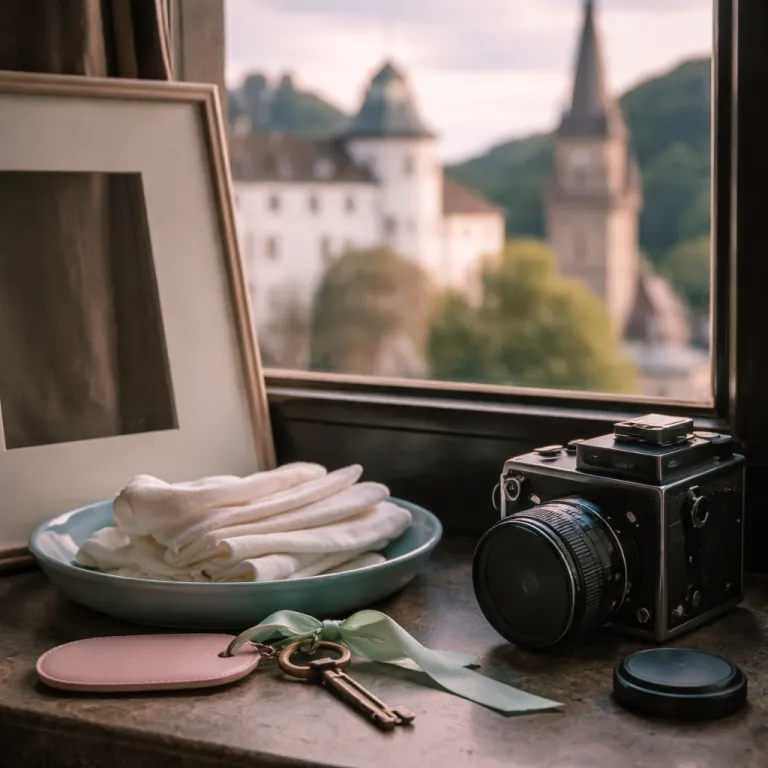
Rooms facing the valley side offer layered views of the town, with the parish church towers and the white chateau silhouette of Clervaux Castle framed by forested slopes. In the evening, when the castle is lit, the image from your window feels almost theatrical, especially on misty days when the Ardennes air softens the outlines. For solo guests, this combination of visual drama and practical proximity is precisely what makes staying in Clervaux such a satisfying base.
The hotel restaurant works well if you prefer to keep evenings simple, with seasonal plates that nod to Ardennes game and Luxembourg wines without overwhelming you after a day of walking. Step outside after dinner and you can stroll along Rue Clervaux or Grand Rue, where the town quiets early and the only real noise comes from the river below. That calm, paired with the knowledge that you can visit Clervaux highlights again the next morning without any rush, is a luxury in itself.
The Family of Man exhibition at Clervaux Castle
The cultural anchor of Clervaux is The Family of Man exhibition, permanently housed in Clervaux Castle. Curated by Edward Steichen, this photography exhibition gathers 503 photographs by 273 artists from 68 countries, arranged thematically in the white walled rooms of the chateau. It was first shown at MoMA and later donated to Luxembourg, before being installed in the castle in the mid 1990s (commonly cited as 1994; check current official sources for precise dates), where it now forms part of UNESCO’s Memory of the World register (inscribed in 2003).
Walking up to Clervaux Castle, you pass the parish church and the main Clervaux Place, then enter through a modest gate into a courtyard that feels more village than fortress. Inside, the museum team has preserved the original narrative arc of The Family of Man exhibition, where images of birth, work, love, conflict and peace are sequenced to highlight universal human experiences. One panel in the official material captures it clearly: "A photography exhibition curated by Edward Steichen, showcasing human experiences."
Allow at least two hours to visit Clervaux Castle and The Family of Man rooms, more if you like to read captions and sit with certain images. The post war context, with its emphasis on peace after the Second War, still resonates, especially when you remember that the surrounding Ardennes hills were a front line during the Battle of the Bulge. In this setting, the exhibition’s humanist message feels less like abstraction and more like a quiet counterpoint to the battle history that shaped Luxembourg Clervaux.
Practicalities matter here for a smooth weekend. Check opening hours before you visit Clervaux Castle, as they vary by season, and note that an entrance fee applies (around 6–7 EUR for adults at the time of writing; confirm the latest tariff on official museum or tourism sites), with guided tours available on request through the tourist info office in town. The museum signage is clear, the flow intuitive and solo visitors will find it easy to move at their own pace, pausing where a particular image or sequence of images demands more time.
For travelers who enjoy combining culture with landscape, it is worth pairing this exhibition with a day of walking in another part of the country, such as the sandstone trails described in the Mullerthal Little Switzerland trail guide. That contrast between the curated images of The Family of Man and the raw rock formations of the Mullerthal underlines how varied a short stay in Luxembourg can be. It also reinforces why Clervaux deserves a dedicated weekend rather than a rushed stop on the way north.
Abbey, parish church and wartime memory in the Ardennes
Beyond the castle, Clervaux offers a quieter layer of heritage on the hill above town. The Benedictine abbey of Saint Maurice and Saint Maur stands just beyond the center, reached by a short but steady climb that rewards you with views back over the valley. This Benedictine abbey, built in a restrained romanesque style, remains a working monastery where monks still follow a regular rhythm of prayer and craft.
Solo travelers who appreciate contemplative spaces will find the abbey church particularly atmospheric, with its simple stone, filtered light and measured acoustics. At certain times you can hear Gregorian chant, which pairs unexpectedly well with the surrounding Ardennes landscape and the knowledge that the town below has lived through both peace and battle. The abbey’s ceramics workshop, when open, offers a small selection of pieces that make thoughtful, low key souvenirs from Luxembourg Clervaux.
On the way up or down, pause at the parish church that anchors the town Clervaux skyline, its twin towers visible from most angles in the valley. Inside, the romanesque style details are more modest than in the abbey, but the church tells its own story of a community that rebuilt after the Second War and the Battle of the Bulge. Information panels and local guides sometimes refer to this as the Battle of Clervaux, a reminder that these quiet streets once saw intense fighting.
The surrounding Ardennes hills still carry traces of that period, from small memorials to occasional museum style displays in nearby villages. If wartime history is a priority, consider a short excursion from Clervaux to sites associated with the Battle of the Bulge, using the free public transport network that links the town to other parts of northern Luxembourg. Returning in the evening to the calm of the center, with the abbey lights glowing above and the castle walls illuminated, you feel the contrast between past conflict and present tranquility very directly.
Hiking, day trips and nature around Clervaux
One of the strongest arguments for choosing Clervaux over a purely urban stay is how quickly you can step into nature. From the edge of town, marked trails lead into the surrounding Ardennes forests, where beech and spruce line narrow valleys and ridges. Even a short hiking loop of 8 to 10 km gives you a sense of how closely nature Clervaux wraps around the town.
Solo hikers will find the waymarking clear, with routes that start near the parish church or just beyond the center, then climb steadily towards viewpoints over Clervaux Castle and the Benedictine abbey. On misty days the white chateau walls of the castle appear and disappear between trees, an image that stays with you long after the weekend ends. These paths are never far from the town, yet the quiet can feel absolute, especially outside peak holiday periods.
For a contrasting day trip, use the free train from Clervaux to Vianden, where another hilltop castle dominates a bend in the river Our. Vianden Castle is larger and more fortified than Clervaux Castle, and pairing the two over consecutive days gives you a compact masterclass in Luxembourg’s chateau architecture. If you prefer to stay closer, the small locality of Erpeldange sur Sûre lies within reach, offering a softer landscape of fields and riverbanks that complements the steeper Ardennes around town.
Those who like to structure their days tightly can combine a morning hiking loop with an afternoon museum visit and an early evening spa session back at the hotel. Others may simply walk out along Rue Clervaux, follow a path into the woods and let the day unfold without a fixed plan, knowing that the center and its restaurants are never far away. Either way, Clervaux proves that you do not need a car to access serious nature, only good shoes and a willingness to follow the next waymark.
If you are building a longer itinerary across the country, consider pairing this northern base with a night at a more urban Relais & Châteaux style address such as the one reviewed in the Villa Pétrusse Relais & Châteaux feature. That combination of Clervaux for hiking and heritage, then a city stay for gastronomy and galleries, delivers a balanced view of the Grand Duchy. It also underlines how the Ardennes and the capital can complement rather than compete with each other in a single trip.
Practicalities: getting to Clervaux and planning your days
Reaching Clervaux without a car is straightforward, which makes it ideal for solo travelers who prefer trains to driving. From Luxembourg City, direct trains run roughly once an hour, taking about 1 h 15 min to reach the town, and public transport across the country is currently free for passengers. From the station, it is a short walk of around 800 m to the center, with clear signage towards the castle and the main Clervaux Place.
At the heart of town you will find the tourist info office, usually located close to Grand Rue and Rue Clervaux, where staff can provide maps, hiking suggestions and up to date details on museum opening hours. This is also the best place to ask about guided tours of Clervaux Castle, The Family of Man exhibition and the Benedictine abbey, as well as any temporary exhibition in the local museum spaces. Solo visitors who like structure will find it easy to plan two or three days of varied activities using this central resource.
A typical weekend in Clervaux might unfold as follows. On day one, arrive by train, check into your hotel in the center, then spend the afternoon at The Family of Man exhibition in Clervaux Castle, leaving time for a slow walk back via the parish church. On day two, dedicate the morning to the Benedictine abbey and its romanesque style church, then take an afternoon hiking loop in the Ardennes hills above town, perhaps extending your stay by extra days if you find a rhythm that suits you.
Food wise, the compact scale of town means you will find most restaurants clustered along Grand Rue and around the main square. Menus tend to balance Luxembourg classics with broader European dishes, and solo diners are common enough that you will not feel out of place eating alone. If you are a family man or woman planning a return trip with a family, note that Clervaux also works well for multi generational stays, with short walking distances, a strong family friendly museum offer and easy access to nature for children.
Key figures for Clervaux’s cultural landscape
- The Family of Man exhibition at Clervaux Castle presents 503 photographs by 273 photographers from 68 countries, making it one of the most internationally representative photography collections permanently housed in a single museum space in Luxembourg.
- The train journey from Luxembourg City to Clervaux takes about 1 h 15 min, which places the town within comfortable reach for a weekend, especially given that public transport in the country is currently free for passengers.
- Within roughly 1 km on foot from the center you can reach the castle, the Benedictine abbey and several marked hiking trailheads, an unusually compact concentration of culture and nature for a town of this size in the Ardennes.
- The Family of Man exhibition has been permanently installed in Clervaux Castle since the mid 1990s and has been part of UNESCO’s Memory of the World register since 2003, underlining its long term cultural significance for Luxembourg Clervaux.
FAQ about a weekend in Clervaux, Luxembourg
What is The Family of Man exhibition in Clervaux ?
The Family of Man is a landmark photography exhibition curated by Edward Steichen and permanently housed in Clervaux Castle. It brings together 503 photographs by 273 photographers from 68 countries, arranged thematically to highlight shared human experiences. The exhibition is open to the public with an entrance fee, and guided tours can be arranged through the local tourist info office.
How long should I plan for a visit to Clervaux Castle ?
Most solo travelers should plan at least two hours for Clervaux Castle if they want to experience The Family of Man exhibition without rushing. If you are particularly interested in photography or museum design, three hours allows time to revisit certain rooms and reflect on specific images. It is wise to check opening hours in advance, as they vary by season and day of the week.
Is Clervaux easy to reach without a car ?
Yes, Clervaux is very accessible by public transport, especially from Luxembourg City. Direct trains run roughly once an hour, and the journey takes about 1 h 15 min, with the station located within walking distance of the center. Since public transport in Luxembourg is currently free, this makes the town an attractive option for car free weekend trips.
What can I do in Clervaux over a weekend ?
Over two or three days in Clervaux you can visit Clervaux Castle and The Family of Man exhibition, explore the Benedictine abbey and the parish church, and spend time hiking in the surrounding Ardennes hills. The compact town also offers a handful of good restaurants and at least one premium hotel in the medieval center, making it easy to balance culture, nature and comfort. Day trips to Vianden Castle or nearby villages such as Erpeldange sur Sûre are also feasible using the free public transport network.
Is Clervaux suitable for solo travelers ?
Clervaux is particularly well suited to solo travelers who value walkability, cultural depth and access to nature. The center is small enough to feel manageable, yet rich enough in museums, religious architecture and hiking options to fill several days without repetition. The town’s calm atmosphere, combined with reliable public transport and clear tourist info services, makes this part of northern Luxembourg a reassuring and rewarding choice for independent trips.
Sources and further reading
- Official information on The Family of Man exhibition from Visit Clervaux and Luxembourg government cultural portals (consult these for the latest details on opening hours, entrance fees and exhibition history).
- Practical transport and timetable details from the national public transport operator in Luxembourg, including current confirmation that trains to Clervaux are covered by the free fare system.
- Background on UNESCO’s Memory of the World register from UNESCO’s official publications, which explain why The Family of Man and Clervaux Castle hold such a prominent place in Luxembourg’s cultural landscape.